Built for the Long Run: Why I Created The Injury Resistant Runner
Why I Created The Injury Resistant Runner
Running is one of the simplest and most rewarding forms of exercise, but for many runners, staying consistent can feel frustratingly difficult.
As a physical therapist, I regularly see runners stuck in the same cycle:
Pain develops → training decreases → symptoms calm down → running resumes → pain returns.
Often, the problem is not a lack of motivation. Most runners I work with are already highly motivated and doing a lot. The challenge is that many do not have a structured approach to building the strength and durability needed to tolerate the demands of running long term.
That’s one of the main reasons I created The Injury Resistant Runner.
There is often a gap between “I finished rehab” and “I feel ready to train confidently again.” This program was designed to help bridge that gap. It can serve as both proactive strength training to reduce injury risk and a practical way to continue building resilience after returning from an injury.
The Problem With Most Runner Strength Programs
Many strength programs for runners fall into one of two extremes:
overly intense workouts that are difficult to sustain
random exercise routines with little progression or structure
For busy runners, that can quickly become overwhelming.
Most people do not need hours in the gym or exhausting workouts multiple times per week. What they often need is a realistic approach they can consistently maintain alongside their running.
That philosophy became the foundation of this program: two days per week of full-body strength training designed to support the demands of running.
What The Injury Resistant Runner Focuses On
The Injury Resistant Runner is built around practical strength training designed to help runners stay healthy, move well, and continue running long term.
The program focuses on:
realistic, time-efficient workouts
progressive strength training
exercises selected specifically for runners
consistency over extremes
building strength that supports both performance and durability
The goal is to help runners feel stronger, more confident, and better prepared to handle training demands over time.
Why Strength Training Matters for Runners
My former running coach loves the saying, “the legs feed the wolf.” Strong legs create a strong runner.
Running alone can build endurance, but strength training helps develop qualities that running by itself may not fully address: strength, balance, power, motor control, and the ability to tolerate repeated stress over time.
That does not mean injuries can always be prevented. No program can guarantee that.
But improving overall strength and physical preparedness can help runners become more resilient throughout training, especially during higher mileage or more demanding race preparation.
Strength training may also help runners:
improve running economy
maintain muscle mass
better tolerate hills and speed work
improve confidence with training
feel stronger during everyday movement
Designed for Busy People
One of the biggest priorities while creating this program was sustainability.
Most runners are balancing work, family, responsibilities, and training all at the same time. Long, complicated gym sessions are simply not realistic for many people.
That’s why this program focuses on manageable workouts that can fit into a busy schedule without adding unnecessary stress.
The program also includes:
structured workout tracking charts
exercise video demonstrations
weekly reflection prompts
clear progressions
a simple, organized format
The goal was to create something approachable and practical rather than overwhelming.
Who This Program Is For
This program may be a good fit for runners who:
want to start strength training but are unsure where to begin
have struggled with recurring injuries or setbacks
want a structured approach written by a physical therapist
are looking for realistic, sustainable training
want to feel stronger and more confident while running
A Program You Can Use Long Term
While creating this program, I kept thinking about how many fitness platforms now rely on monthly subscriptions.
Subscriptions can work well for some people, but they can also become overwhelming when combined with multiple apps, memberships, and recurring payments.
I wanted this program to feel simpler than that.
My goal was to create something accessible and practical: a resource runners could continue returning to without feeling locked into another ongoing expense. Running has brought a lot of joy to my life, and if I can help lower barriers that keep people from enjoying it too, I want to do that.
The Injury Resistant Runner is a one-time purchase designed to provide a structured system runners can continue using over and over again.
Rather than constantly adding new content or creating endless complexity, I wanted to build a solid foundation runners could revisit whenever they need structure, consistency, or a reset in training.
Because sustainable strength training does not need to be complicated.
Often, the most effective approach is simply having a clear system you understand well enough to use consistently over time.
Whether you are:
returning after an injury
rebuilding consistency
entering a new training cycle
or simply looking for a more organized approach to strength work
The program is designed to remain useful far beyond just a few weeks of workouts.
I wanted it to feel less like a temporary fitness challenge and more like a long-term resource runners can continue applying throughout their training journey.
Built for the Long Run
At the end of the day, most runners are not looking for the most extreme training program possible. They simply want to stay healthy enough to keep running consistently.
That’s what inspired The Injury Resistant Runner:
A structured, sustainable approach to strength training designed to support long-term running health without unnecessary complexity or exhausting workouts.
The program is officially available now, and I’m excited to finally share it.
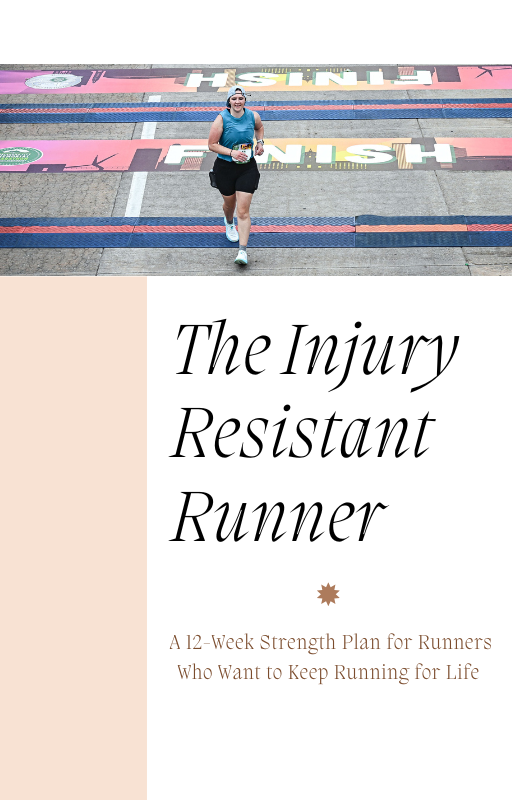
The Injury Resistant Runner
A stronger runner is a more resilient runner.
The Injury Resistant Runner is a 12-week strength training program designed specifically for runners who want to stay healthy, run consistently, and get stronger without spending hours in the gym.
Most runners know they should strength train.
The problem is finding a plan that’s actually realistic.
This program was built for busy runners who want the biggest return from the least amount of time. Every workout is focused on high-value exercises that improve strength, stability, durability, and running performance without unnecessary fluff.
No complicated bodybuilding splits.
No 90-minute gym sessions.
Just efficient training that supports your running instead of competing with it.
Designed by a physical therapist, this program helps runners:
Build strength that carries over to running
Improve durability and reduce injury risk
Increase stability, balance, and control
Stay consistent without feeling overwhelmed
Fit strength training into a busy schedule
What’s Included
12-week progressive strength program
Time-efficient full body workouts
Workout tracking charts to log weights and monitor progress each week
Weekly reflection prompts to help you stay consistent and intentional with your training
Mobility and stability exercises for runners
Exercise video demonstrations
Form and technique guidance
Whether you’re training for races, trying to stay pain-free, or simply wanting to feel stronger on your runs, this program helps you build a body that can handle the miles.
Because running more only works if your body can keep up.
